


By Carrie A. Shuster
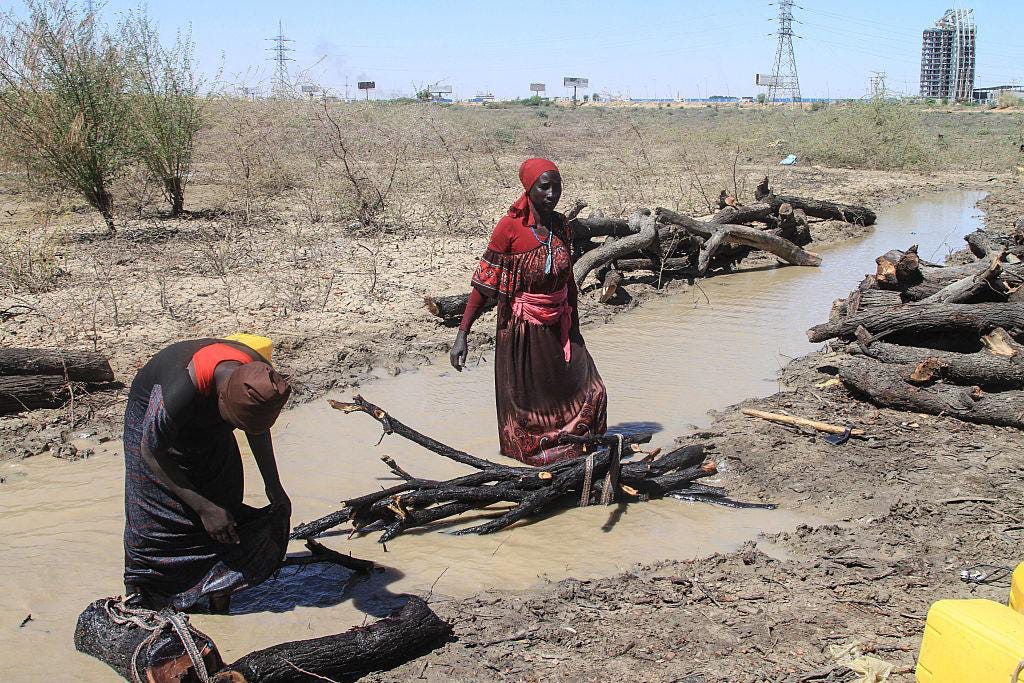
The Sunut Forest in Khartoum has been largely destroyed during the ongoing conflict, underscoring the environmental and humanitarian impacts of war in Sudan. [Photo: UNEP]
A family still needs to cook dinner when the electricity goes out. But when the power is gone, and there is no money left to buy fuel, what are the Sudanese left to do?
That question drives an important part of the environmental consequences of Sudan’s war. According to UNICEF, the conflict between the Sudanese Armed Forces (SAF) and the Rapid Support Forces (RSF) has created a humanitarian crisis affecting about 33.7 million people needing assistance in 2026. [3]
Fuel and electricity infrastructure has been damaged, and the transport channels that deliver agricultural and medical supplies have been disrupted. Without the availability and affordability of fuel, electricity or water treatment, many Sudanese struggle to fulfil even their most basic requirements.
When a reliable cooking fuel is unavailable or unaffordable, they tend to use alternatives, such as collecting firewood from places like Sunut Forest. Some even sell the wood from the forest as an alternative way of earning. A forest can become a casualty of war without a single weapon being fired at it.
Sunut Forest, a six-square-kilometre reserve in Khartoum, was once filled with acacia trees and migratory birds. By April 2026, much of that landscape was gone. The United Nations Environment Programme (UNEP) reported extensive tree loss as residents harvested wood for cooking fuel or sold it to earn money. [1] The forest had become a resource people relied on to cook dinner every night, but using it came at the expense of the ecosystem itself.
What makes Sunut notable is that the forest did not disappear when the fighting began. In 2025, the Conflict and Environment Observatory (CEOBS) reported no significant deforestation or fire damage there between April 2023 and January 2024, and a subsequent satellite report described the forest as largely unaffected by the conflict. [2] Yet the landscape documented in April 2026 showed substantial tree loss. [1] The difference suggests the loss occurred after 2024, although the available reports do not establish precisely when.
This raises important questions about how we document environmental damage during conflicts. Satellite analysis typically looks for direct markers: craters, fires, destroyed buildings and damaged military equipment. However, what is harder to document are the unintended consequences that follow conflict destruction. The infrastructure people depend on becomes damaged and stops functioning, causing the surrounding landscape to become an alternative source of fuel.
The scale of damage to Sudan’s infrastructure helps explain why these pressures develop. CEOBS documented 401 incidents across Khartoum’s major industrial zones between April 2023 and January 2024. By March 2024, only one of Khartoum State’s 13 water treatment plants remained operational. [2]
When a conflict causes destruction of water treatment plants, it does not eliminate people’s need for water. What occurs instead is that it drives communities to seek alternative sources that will fill the void in terms of the need for water and fuel, thereby increasing the exposure of families to unclean water, hence public health risk. In consideration of what electricity does, that is, providing power for water pumping, operation of treatment plants, cold storage for medicines and hospitals. Losing electricity is not just an inconvenience. It disrupts people’s daily lives and forces communities to look for other sources of energy.
Damage to oil infrastructure adds further concerns. In 2024, PAX, a Dutch peace organisation, identified at least six oil spills along Sudan’s petroleum pipelines. Some were linked to conflict-related attacks, while others were attributed to inadequate maintenance and oversight during the war. Satellite imagery of the Al Jili refinery also revealed at least 27 destroyed storage tanks. [4] Satellite imagery can document visible damage and spills, but it cannot always show who caused them or how far contamination extends. Those questions require further investigation and environmental sampling.
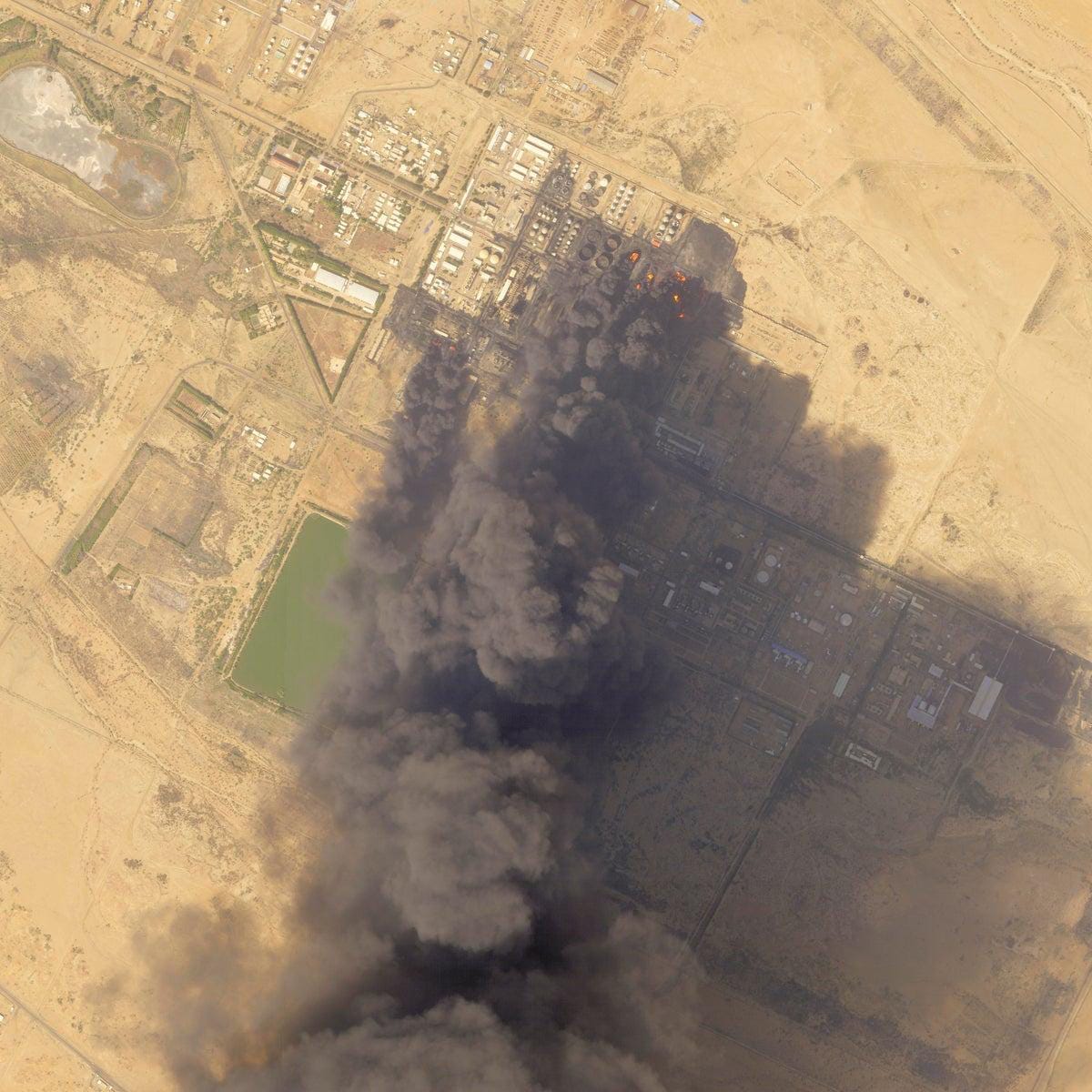
Al Jili oil refinery burning, Jan 2025, Planet Labs PBC
Military sites carry similar risks. Fighting in Khartoum has damaged airport fuel storage facilities, military maintenance areas and ammunition depots that may contain petroleum products, metals and explosives-related residues. [4] However, damaged infrastructure does not automatically mean contamination. A destroyed storage tank may indicate a potential release, but analysis and testing must establish the presence and extent of contaminants in surrounding soil or water.
The economic consequences extend well beyond Sudan. A 2024 study estimated that the conflict’s disruption of oil production amounted to 35,000 barrels a day, or roughly $2.5 million in daily revenue at the time. [5] South Sudan depends on oil pipelines that pass-through Sudan to export its oil. These pipelines help supply fuel at affordable prices. However, the conflict has damaged oil infrastructure and disrupted fuel supplies. As a result, fuel has become unaffordable or unobtainable. This has led local communities to use the nearest available resource alternative from the forest.
When that petroleum network is damaged, the effects reach far beyond government income, employment and the money for recovery. It affects people's daily lives and increases pressure on forests as people search for fuel.
The fuel supply, household income and the ability to protect forests are not separate concerns. The economic damage crosses borders. Environmental security must be integrated into Sudan’s infrastructure planning and post-conflict recovery, as the war’s damage extends beyond immediate environmental harm to the wider consequences for community livelihoods, natural resources, and long-term ecological resilience. Electricity is important for community well-being because it supports water treatment and energy supply, while frequent power cuts and lost wages can force households to depend more heavily on nearby natural resources.
And rebuilding is not as simple as turning the power back on. CEOBS estimated that a 57-square-kilometre section of Khartoum contains about 100,000 tonnes of conflict-related debris. [2] This includes rubble that may conceal hazardous materials or unexploded ordnance. Reusing it without checking what it contains, such as lead or asbestos, would carry those hazards into the next phase of the city’s life.
In September 2026, the United Nations Mine Action Service reported that explosive hazards had prevented repairs to electrical substations in Greater Khartoum. Seven of fifteen priority substations had been cleared, however, engineers cannot repair equipment they cannot safely reach. [6]
Recovery is also a question of whose voices get heard. Which neighbourhoods get water first? Who decides where debris is moved, or whether land is safe to use? A 2025 assessment by CEOBS and the Conflict Sensitivity Facility called for Sudanese expertise and local participation in environmental recovery. [7] These are decisions for people who will have to live with the results, not only for the agencies paying for the work.
UNEP has reported that young acacia trees are beginning to return to Sunut. [1] That is encouraging, but it does not resolve what led people to cut the forest down in the first place. Science reports can describe the biodiversity and ecosystem services forests provide, and those matter, but none of them cooks dinner. Without affordable, reliable fuel, employment and functioning public services, a replanted forest may face the same pressures as the one it replaced.
Sudan’s environmental recovery should not be measured only in trees planted or substations repaired. It should also be measured by whether families can live without having to consume the landscape around them.
About the Author: Carrie A. Shuster is a U.S. Navy veteran, environmental researcher, and writer. After serving five years in the U.S. Navy, working on aircraft overseas, she pursued a master’s degree in environmental science and oceanography. Her research includes published work on heavy metal contamination left behind on Iwo Jima. Through her research and writing, she aims to raise awareness of the environmental damage caused by war and make its long-term consequences more accessible to a wider audience.
Sources
[1] Synenko, A. (2026). Can this iconic Sudanese forest come back from the brink? United Nations Environment Programme. https://www.unep.org/news-and-stories/story/can-iconic-sudanese-forest-come-back-brink
[2] Conflict and Environment Observatory. (2025). The environmental costs of the war in Sudan. https://ceobs.org/the-environmental-costs-of-the-war-in-sudan/
[3] UNICEF. (2026). Sudan Humanitarian Mid-Year Situation Report 2026. https://www.unicef.org/sudan/reports/unicef-sudan-humanitarian-mid-year-situation-report-2026
[4] PAX. (2024). Oil in the Crosshairs: Environment, Peace, and Security Implications from the War in Sudan and Spillover Effects on South Sudan. https://paxforpeace.nl/news/oil-in-the-crosshairs/
[5] Elnourani, M., et al. (2024). Khartoum War’s echoes in oil and energy sectors: Economic and environmental implications for Sudan and South Sudan. Heliyon, 10(15), e34739. https://doi.org/10.1016/j.heliyon.2024.e34739
[6] United Nations Mine Action Service. (2026). Powering Recovery: Restoring Electricity to Greater Khartoum. https://www.mineaction.org/en/unmas/news/powering-recovery-restoring-electricity-to-greater-khartoum
[7] Conflict and Environment Observatory & Conflict Sensitivity Facility. (2025). The environment, conflict and peace in Sudan: From response to recovery. https://ceobs.org/the-environment-conflict-and-peace-in-sudan-from-response-to-recovery/
© 2026 The Frontier Review. All rights reserved.
