


Hours of sirens, sleepless nights, and the anticipation of another attack have brought mental exhaustion to the people of Ukraine. On August 1, 2026, Russian forces fired around 30 ballistic missiles at Kyiv. Ukrainian state authorities reported nine dead and many injured after the strikes, including reports of damage to five districts—Solomianskyi, Darnytskyi, Shevchenkivskyi, Dniprovskyi, and Pecherskyi. Russia has conducted multiple mass strikes with drones, cruise missiles, ballistic missiles, glide bombs, and one-way attack drones, causing significant damage in the region.
The Russian Defence Ministry said its forces carried out a “massive” strike on targets in nine Ukrainian cities that began after nightfall on August 26, 2026. It described the targets as military-related, including industrial facilities, oil refineries, logistics hubs and port infrastructure. In a span of a week, Kyiv endured 76 air raid alerts. Analysts say Russia's aim is not only to weaken Kyiv's morale but also to damage Ukraine's economy by targeting businesses and warehouses.
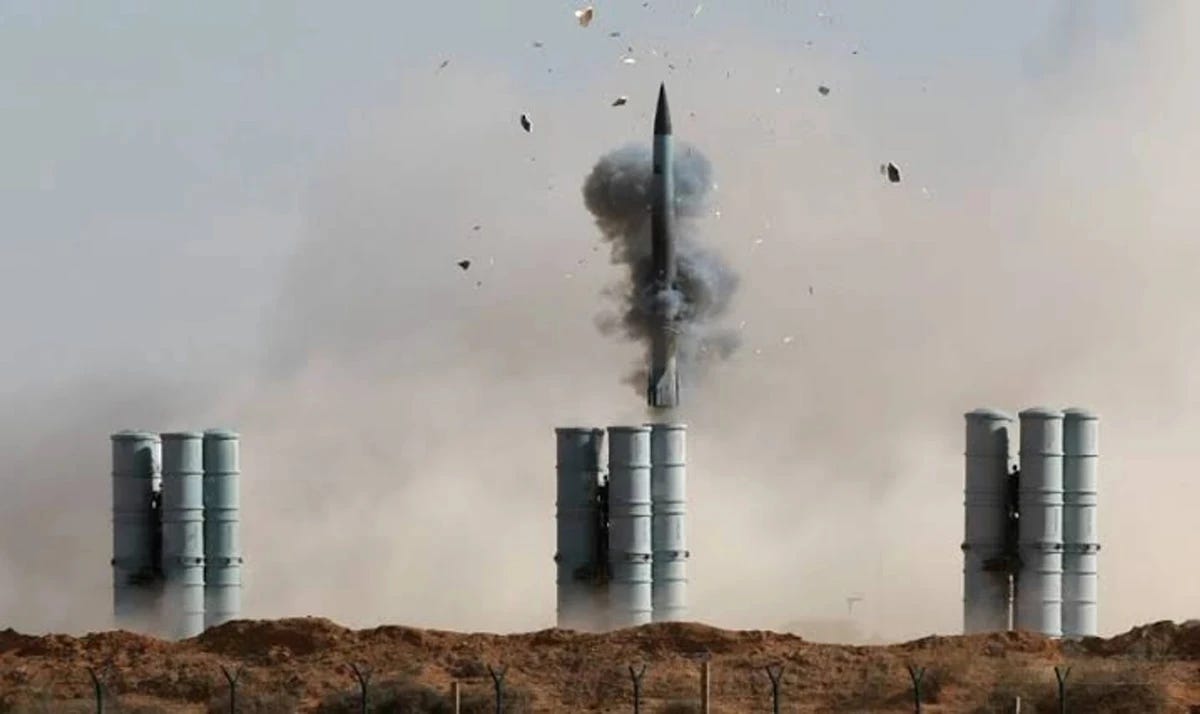
Russian forces are using long-range firepower and have been sending small groups of Shahed-type drones toward Kyiv at regular intervals, sometimes only 30 to 60 minutes apart, stretching air raid alerts across much of the day and repeatedly disrupting transportation, businesses and logistics. Initially designed in Iran, Shahed drones are now manufactured by Russia using engines from various sources, including China. The Shahed-238 Loitering Munition, a new advanced version, includes a mix of software-defined radios and other guidance systems that make it harder to jam. A jet-powered variant of the Shahed, the Geran3, with a range of 1,533 miles, has been produced, making the warfare more advanced. Russia also used S-400 missiles for ground attack. The S-400 was designed as a long-range air defence system. Its missiles are mainly used to intercept threats in the air. With vast Soviet-era stockpiles for Russia, converting S-300 and S-400 surface-to-air missiles into ground-attack weapons is a practical solution.
When Russia from the Vologda region launched 61 Kh-101 and Kalibr cruise missiles in Ukraine, Ukrainian F-16 fighters shot down 38 of 54 intercepted cruise missiles during a July 30, 2026 Russian attack of 61 missiles. Ukraine’s older Soviet-era jets, the MiG-29s and Su-27s that formed the backbone of Ukrainian airpower, were replaced by American-made jets F16. Ukraine has formally asked the European Union to use its €90 billion support loan to help fund the purchase of US-made PAC-3 interceptor missiles for its Patriot air-defence systems, as Kyiv faces a critical shortage of interceptors.
Ukraine is set to receive next-generation SAMP/T systems and additional air defence missiles by the end of the year as part of Italy’s latest military aid package, the Italian outlet La Repubblica reported on Aug. 26. It includes four SAMP/T NG air defence batteries, Aster 30 interceptor missiles, and seven long-range radars, which are funded through European Union loans. Paris and Rome have also agreed to authorise the production of French-Italian Aster 30 N1BT interceptor missile systems in Ukraine. Project Freyja is a Ukrainian-led effort to develop a European anti-ballistic missile system, with a prototype expected by mid-2027. With an open-architecture "system of systems," it integrates with existing NATO-standard radars, command posts, and data links rather than functioning as a standalone national system. The project’s stated aim is to deliver a lower-cost, higher-volume European alternative to the U.S. Patriot PAC-3 for intercepting ballistic missiles.
Ukrainian defence company Fire Point has moved its FP-7 tactical ballistic missile into the military testing phase, bringing the system closer to certification and possible entry into service. The FP-7 is designed to carry a 150 kg payload with range of up to 300 km, a maximum speed of about 1,500 meters per second, and a circular error probable of roughly 14 meters. It is a lower-cost alternative to the U.S. ATACMS.
At this point, Kyiv must plan for a winter with severely disrupted power and disrupted life-support systems such as water, sanitation, power. Ukraine is developing ways to attack the Russian production facilities, but these factories are very well guarded. Technology alone has never won wars, but mediation and peace treaties have. As Ukraine contributed to its own success through the courage and aggression of its fighter pilots and the adaptability of its GBAD systems. Timely and sufficient deliveries of air-defence systems and munitions to Ukraine are crucial to sustaining Russian attacks. As European nations have heavily supplied and supported Ukraine, they cannot act as a mediator in this situation. The US has been trying to start peace initiatives, but for ages, the US and Russia have fought an ideological battle, which might affect the outcome at present.
I’m afraid right now US is not really trying to help Ukraine at all, but to speculate and do some headlines to make markets reacting😬 while EU is still deeply concerned, I’m afraid even when Russia will attack directly they would still consider it was by coincidence 🫣