


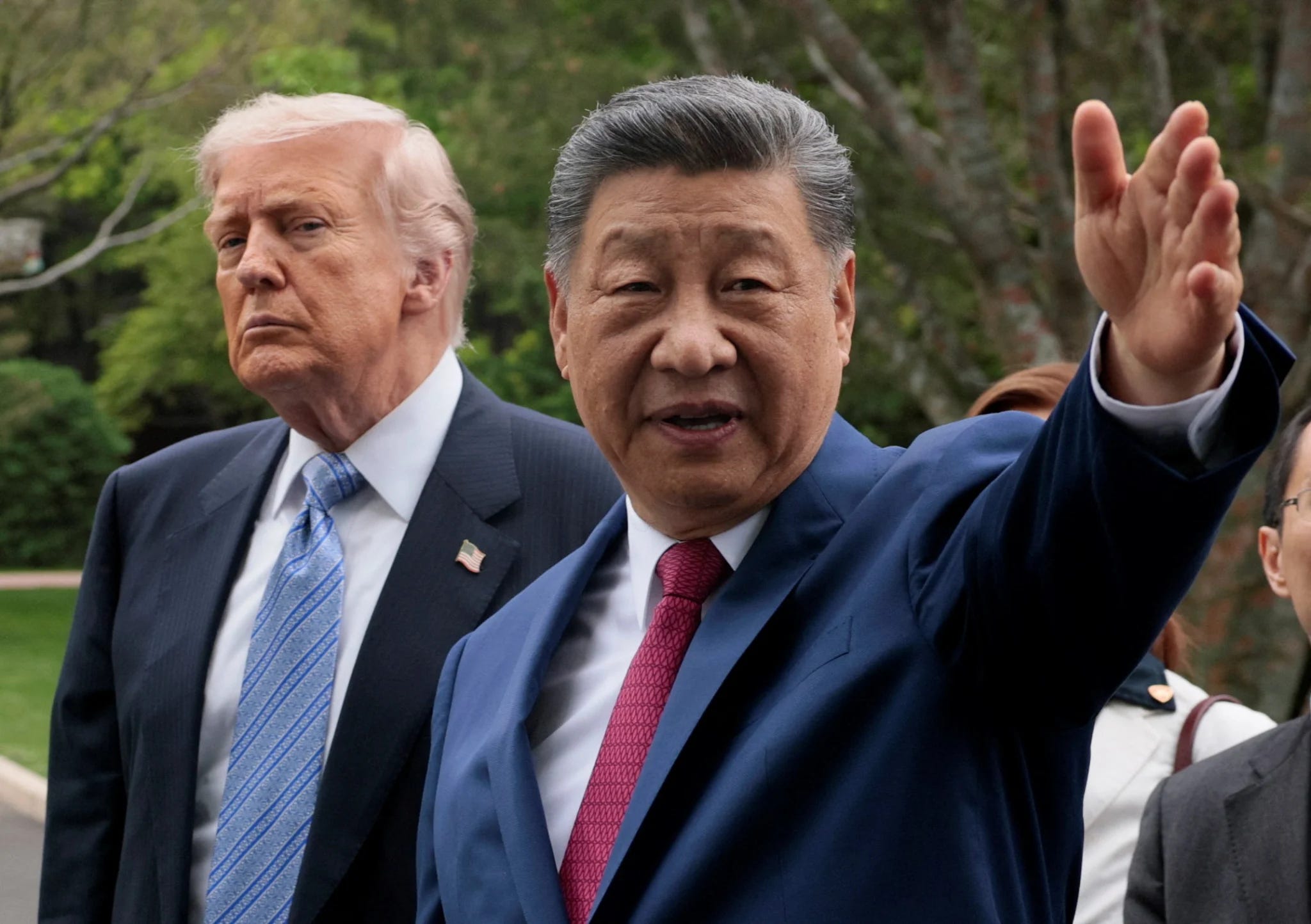
As, the US- China relationship is strained by various debates arising from trade tariffs, the Taiwan issue, and the use of artificial intelligence. Xi Jinping, the Chinese President, is all set to visit America from September 23 to 25 at the invitation of President Donald Trump. Peng Liyuan, wife of Chinese President Xi Jinping, will accompany him on his three-day state visit to the United States. Xi will visit the White House after a decade and meet Trump.
US President Donald Trump and First Lady Melania Trump will host Chinese leader Xi Jinping and his wife Peng Liyuan across Washington during the visit. The itinerary includes a White House welcome, a state dinner at which both presidents speak, a private tea, and a tour of the United States’ founding documents. It will be a third meeting of Trump and Xi after Trump’s second presidential term. The first was in Busan in October, followed by Beijing this past May.
U.S. Trade Representative Jamieson Greer said, "We're not looking for a giant comprehensive trade agreement with China. We're looking to manage this relationship," he said in an interview on a Fox News show.
Xi will probably raise Taiwan during his expected summit with Trump on 24 September. China’s Xi Jinping is expected to press US President Donald Trump to halt Taiwan arms sales under a 1982 joint statement during the visit. China regularly describes the issue of Taiwan, which Beijing views as its own territory, as its most sensitive and important diplomatic issue and has repeatedly called for arms sales to stop. Taiwan's government rejects Beijing's sovereignty claims.
Speaking at a defence forum in Beijing, China’s former envoy to Washington Cui Tiankai said “reunification” with Taiwan would bring stability that is “in the interest of the United States.” Ahead of the summit, Taipei has been clearly conveying its positions to the US side, Mainland Affairs Council Deputy Minister Shen Yu-chung told reporters in Taipei “We hope ... there will be no situation that harms Taiwan,” he said.
Apocalyptic warnings about the danger of uncontrolled artificial intelligence are adding new urgency to talks between President Trump and Chinese President Xi Jinping. Recently, Anthropic CEO Dario Amodei proposed to “slow the pace” of artificial intelligence (AI) development amid rising safety concerns, a call that was quickly joined by OpenAI’s Sam Altman, Google DeepMind’s Demis Hassabis, and SpaceXAI’s Elon Musk. The new push comes after increasing reports of out-of-control AI and researchers raising alarm about the risks to humanity. Trump earlier this week told reporters AI would be among many things being discussed in the visit, and Treasury Secretary Scott Bessent told Axios he’s open to talks about “shared risks” around AI in talks with Chinese counterparts.
China’s restrictions on exports of crucial rare-earth metals and rare-earth magnets remain one of the important unresolved issues as President Trump and Xi Jinping prepare to meet.
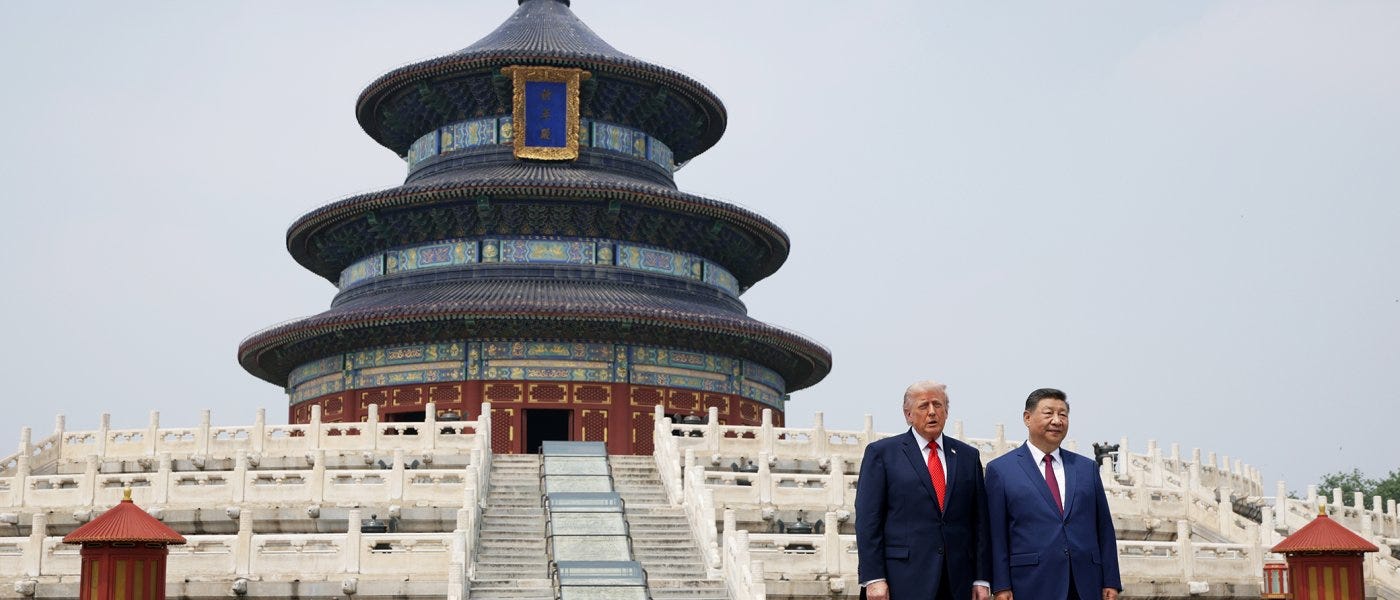
As China leads global production of rare-earth metals, which are essential for making products ranging from cars and wind turbines to semiconductors, computer displays and military equipment, there have been difficulties for imports to manufacturers in multiple countries like the United States, Europe, Japan and India.
China imposed export controls in April 2025 on seven kinds of rare earths and magnets made from them. It later announced a broader set of restrictions, now scheduled to take effect Nov. 10. And in a political dispute, China has slashed shipments of rare earths and magnets to Japan, disrupting supply chains that also serve American manufacturers. All three issues the existing controls, the Nov. 10 restrictions and the curbs on Japan are expected to loom over the meeting between Mr Trump and Mr Xi, China’s top leader. There is little indication so far of how they might be resolved.
China keeps close ties with Tehran and buys far more Iranian oil than any other country. Washington believes President Xi Jinping can pressure Iran more than anyone else, but Xi has shown little willingness to do so. Treasury Secretary Scott Bessent said Trump and Xi will keep discussing China’s financial links to Tehran during their summit. Last week, Trump dismissed a report that said Iran had obtained satellite images of a U.S. base in Jordan from Chinese entities before an attack in July that killed three American troops.
Iran has used a barter-like arrangement to bypass sanctions on its oil sales and buy billions of dollars’ worth of goods from China, including military gear, two senior Iranian sources and three other people familiar with the matter told Reuters. The secretive trade mechanism, in which Iranian oil is exchanged for credits for Chinese imports, has provided a financial lifeline for Tehran in recent years as the United States stepped up economic and military pressure over its nuclear program, according to the sources. This can be a major issue of discussion during the summit.
Key topics include the US-China trade truce that is set to expire on November 10. Both sides will reduce tariffs through the “30 by 30” deal, meaning each country will remove existing tariffs on $30 billion of imported goods. Observers widely expect this announcement, so any failure to deliver it will signal trade trouble in the bilateral relations. China may also announce new purchase agreements on soybeans and Boeing. China already announced several purchases in May, but it can now increase or formalise those numbers in September.
China also likely wants to use this meeting to set the conditions for future meetings. Xi will likely push for Trump to visit China in November for the Asia-Pacific Economic Cooperation (APEC) Economic Leaders’ Meeting. If Trump makes that trip, the two sides have already agreed that Xi would reciprocate by attending the Group of Twenty (G20) Miami summit in December.
However, Russian President Vladimir Putin plans to attend the Asia-Pacific Economic Cooperation summit in person for the first time in nine years, at a gathering hosted by Chinese President Xi Jinping and skip the Group of 20 summit in the United States. Analysts read the contrast as a strategy of keeping distance from Washington, which is pressing Moscow to end its war in Ukraine, while drawing closer to Beijing.
The chances that Putin will sit down with U.S. President Donald Trump at the G-20 in Florida are very low, Bloomberg reported on the 22nd September 2026. Xi will host APEC leaders in Shenzhen, China, for two days starting Nov. 18. Russian officials have floated the possibility that the meeting could produce an unprecedented three-way summit among the leaders of the world’s three largest nuclear powers.
The Iran War, trade and defence agreements and also Washington’s viewpoint of Taiwan will be on the agenda, as the meeting will set the direction for future US-China engagement in the coming months ahead this year in APEC and G20. The relationship can only be stabilised through direct, personal interaction to bring long-term growth in both regions.