


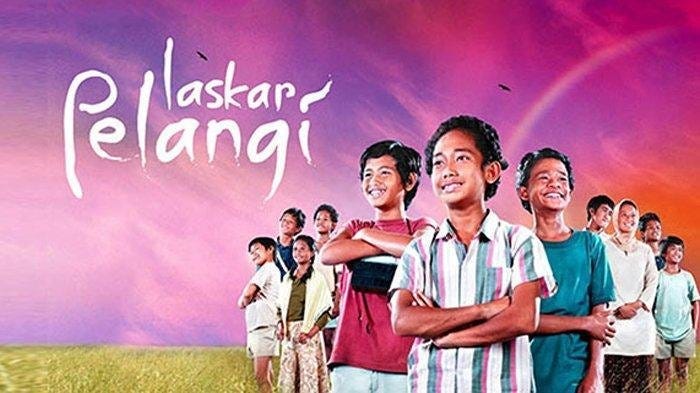
Cinema remains one of the most effective tools of soft power, shaping public perception. It offers a human-centric context to geopolitical regions, highlighting shared historical and societal struggles across regions.
Today, I take you through the story of a film, The Rainbow Troops (Laskar Pelangi) that is more than just cinema: a journey of unwavering dedication, quiet resilience, and the courage to keep moving forward when giving up seems easier.
The movie is based on Andrea Hirata’s bestselling novel. It is directed by Riri Riza. The Rainbow Troops (Laskar Pelangi) is one of the most celebrated and award-winning films in Indonesian cinematic history. Set on the resource-rich but economically marginalised island of Belitung in the 1970s, the film follows ten young students and their dedicated teachers, Muslimah Hafsari, the young, devoted primary teacher and Harfan Efendy Noor, the wise, elderly headmaster. Fighting to keep their underfunded village school, SD Muhammadiyah Gantong, alive.
The South Sumatra Department of Education mandates that SD Muhammadiyah Gantong must enrol at least 10 students to remain open. On opening day, only 9 children show up. The headmaster, Pak Harfan, prepares to announce the school's closure, as the students could not meet the standard regulation of a minimum 10 students by government. A boy named Harun (who has special needs) arrives with his mother to enrol as the crucial 10th student. It is shown that every single child's presence matters, saving the school and allowing the "Rainbow Troops" to form.
During a heavy rain in their leaky classroom, the children stay together. After the storm clears, a vivid rainbow stretches across the Belitung sky. Inspired by the scene, their teacher, Muslimah, affectionately names her ten students Laskar Pelangi (The Rainbow Troops). The movie places special emphasis on Ikal, the version of the author himself, Andrea Hirata. Ikal is observant, determined, and deeply imaginative. He is one among the ten students of the school.
Despite their poverty, the students demonstrated incredible talent. The school won local recognition in Belitung when Mahar, a student with the artistic genius of the group, led the class to victory in the annual 17th of August Independence Day carnival. As the school did not have funds, he initiated his creative, low-cost tribal dance performance, which brought applause. Lintang, who was a maths prodigy, single-handedly led SD Muhammadiyah Gantong to win the prestigious inter-school academic quiz competition with his advanced arithmetic skills by defeating the elite private schools in the region.
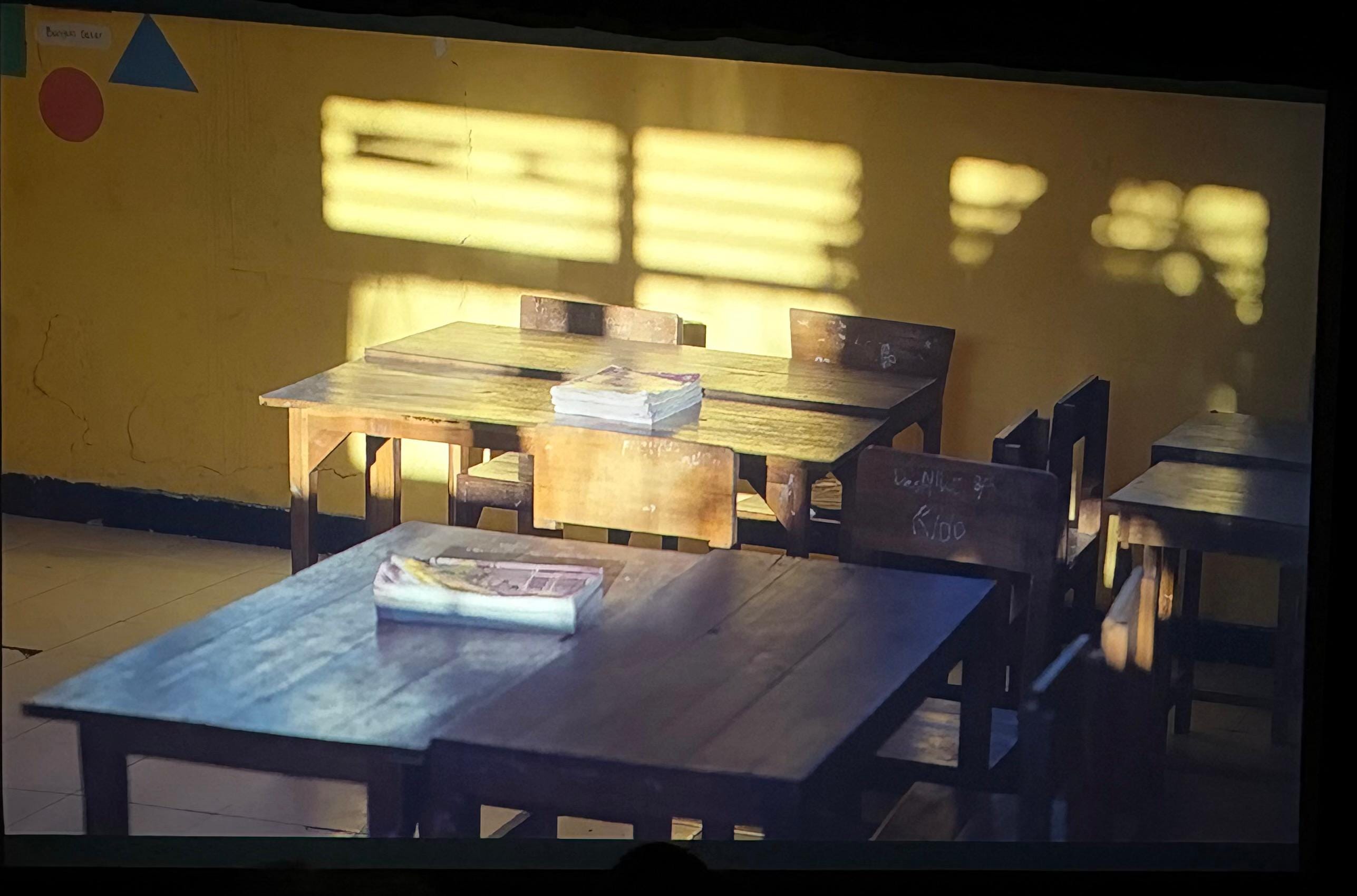
The school's academic momentum was shaken when Pak Harfan, the headmaster of the school, passed away. This led Muslimah to carry the school's education alone. Instead of giving up, the ten students each day gathered at the school daily without the presence of any teacher. The students quietly taught and encouraged each other to keep studying. Seeing her students' resilience brought her back to teaching. It proved that their love for education was stronger than grief. The movie transitions into an emotional scene when Lintang's father, a poor fisherman, passed away at sea. Because Lintang was the oldest son, he was forced to abandon his education and leave school forever to work to support his younger siblings. He compromised his brilliant academic potential for basic survival.
In the 1980s, the global tin market collapsed, bankrupting the mining giant PN Timah. This forced many families into deeper poverty, showing that natural wealth is temporary, while human capital and education endure and give real freedom.
Years later, Ikal reunites with Lintang, now a married labourer struggling financially. Ikal tells him he earned a higher education degree and won a prestigious European scholarship to pursue his master's degree at the Université de Paris (Sorbonne) in France, fulfilling the collective dreams of his childhood classmates and honouring the legacy of SD Muhammadiyah Gantong.
The ending of the movie shows how education transforms lives and teaches you to dream big and achieve upward social mobility. It shows both the tragic loss of unfulfilled potential (Lintang) and the transformative power of perseverance (Ikal). It reinforces that access to proper education is a fundamental human right and that everyone deserves a fair chance to upgrade their lives.
This article points out what is missing even after I watched it several times that resilience is more powerful than being genius.