


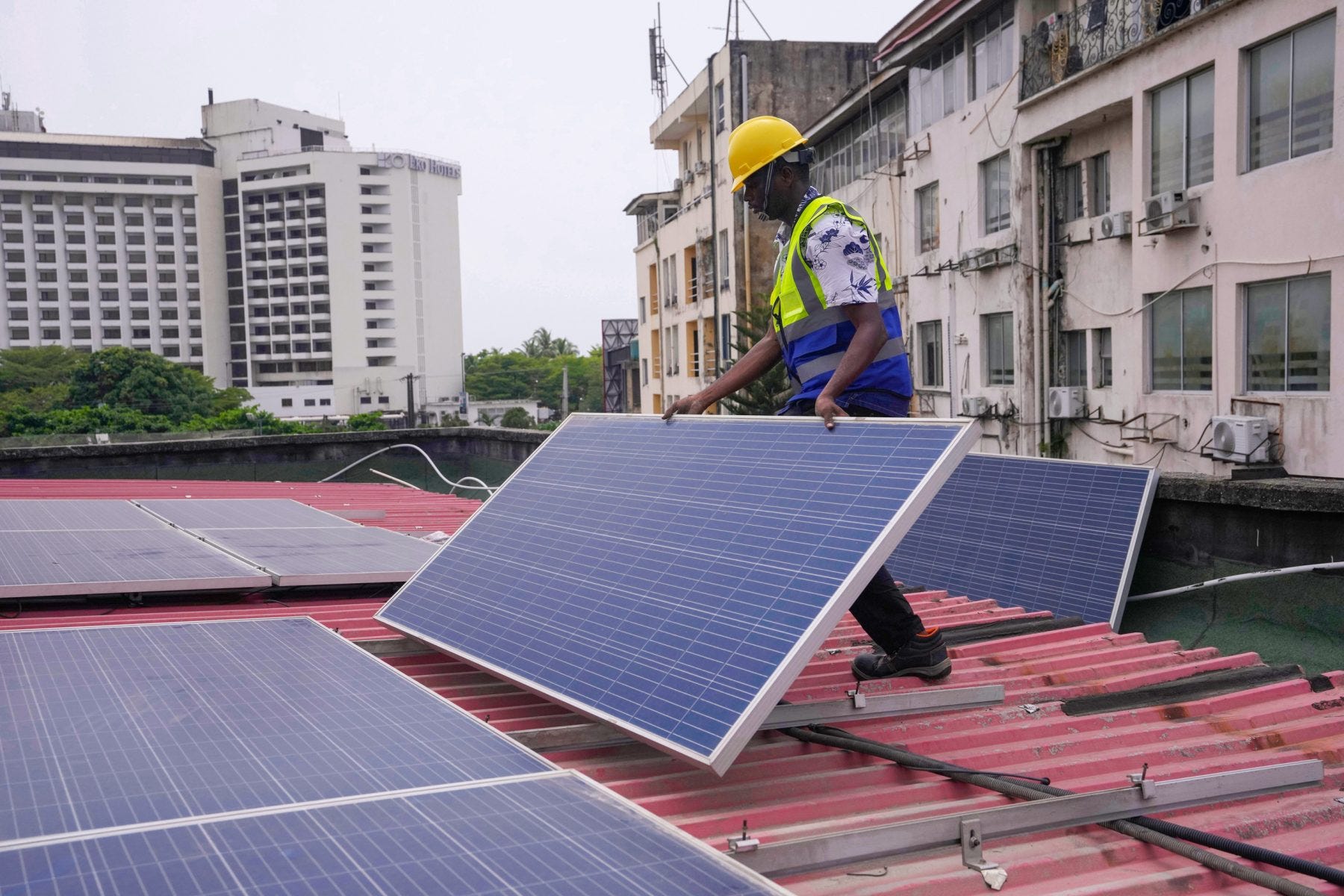
Sub-Saharan Africa’s capacity for renewable energy is estimated to surge by more than 120 gigawatts by 2031. Solar photovoltaic (PV) systems will account for more than 80%, according to a Renewables 2026 report published by the International Energy Agency. The Middle East conflict and disruptions of trade due to the blockade of the Strait of Hormuz have raised the importance of renewable energy and initiated a push for locally generated electricity for African countries.
Nigeria, South Africa and Kenya are among the leading markets for this consumer-led expansion. South Africa and Nigeria together account for more than 40% of the region’s projected capacity additions, followed by Kenya, Ethiopia and Angola. Namibia and Senegal are also expanding their utility-scale solar sectors and off-grid solar photovoltaic systems capacity is set to rise to approximately 80 GW by 2031.
In Nigeria, Africa’s most populous nation, small-scale solar capacity has comfortably surpassed the total power delivered by the national electricity grid. At Lagos’ Alaba International Market, West Africa’s largest electronics bazaar, solar panels, inverters and lithium batteries have increasingly replaced generators in shopfronts. Chinese brands such as Deye and Felicity Solar have gained a strong presence and increased affordability with their lower prices in the market.
Namu, a farming town in Plateau State, Nigeria, is an excellent example of how small solar projects can help rural towns. In November 2025, the Africa MiniGrids Programme (AMP) built a new solar mini-grid in the town, which brought electric lights to the town. Before this, people used kerosene lamps and diesel generators.
However, affordability, maintenance and the ability to meet varying energy demands remain key challenges. According to BloombergNEF, in Nigeria, a roughly 3-kilowatt solar system able to serve a three-person household costs about $4,500, about seven times the upfront price of a new gasoline generator. Without reliable warranties, trained installers and consumer protection, a household’s investment can quickly become a financial loss.
The IEA has estimated that Africa attracts only about 3% of global energy investment, despite accounting for roughly one-fifth of the world’s population. Capital required for utility-scale clean-energy projects in Africa is found to be at least two to three times higher than in advanced economies. Currency depreciation, weak utility finances, elevated debt-service burdens, low sovereign credit ratings, and project-specific risks, including uncertain revenue arrangements, continue to make financing more difficult and expensive.
To address currency risks, the International Solar Alliance (ISA), led by Director General Ashish Khanna, is advocating local-currency financing and currency-risk mitigation. Its Africa Solar Facility, managed by Africa50, targets $200 million in capitalisation. Separately, the $300 million Nigeria Distributed Renewable Energy Fund, launched by Nigeria’s Sovereign Investment Authority, Africa50, and Sustainable Energy for All, with the World Bank as a founding partner, has been publicly highlighted by ISA as a model for scaling distributed renewable-energy investment across Africa.
Zimbabwe is also seeking to attract international financing for its solar sector. In November 2026, the developers of the 30-megawatt Vungu Solar project appointed Standard Bank South Africa and Stanbic Bank Zimbabwe as mandated lead arrangers to coordinate its debt financing. The project, expected to reach financial close in 2027, follows a 25-year power purchase agreement signed with the Zimbabwe Electricity Transmission and Distribution Company in January 2026. Once operational, the project is expected to supply enough electricity to power approximately 76,000 households.
China’s share of global renewable energy growth is expected to decline, creating more opportunities for other markets, particularly India, which is now the second-largest contributor to global expansion. ASEAN, the Middle East and North Africa (MENA), and sub-Saharan Africa are expected to triple their pace of renewable energy growth over the next six years, mainly through solar power projects.
In Southeast Asia, rising demand from businesses, industries and data centres is driving this growth. China’s forecast has been cut by nearly 116 GW, the largest reduction among all regions. However, stronger growth expectations in ASEAN, India, the United States, sub-Saharan Africa and Latin America are expected to balance China’s slowdown.
With over 560 million people in Sub-Saharan Africa still lacking electricity, distributed solar provides a vital lifeline for households and small businesses seeking reliable energy; robust national transmission networks is required for heavy industrialisation, urban growth, and long-term economic development rather than relying completely on solar-powered projects.
Thank you for the analysis! It would be interesting to see statistics on the share of solar power generation in different African nations and how these figures changed over time
More than 40% of the new capacity sits in South Africa and Nigeria, and a lot of the Nigerian side is rooftop kits. Batteries and cheap inverters tend to fail first, so a local repair bench for those is a real job. Which part wore out first on a system you know?