


After the March 2011 Tohoku earthquake, tsunami and nuclear disaster, known as 3.11, Japanese officials realised the need for an adequate disaster management system. The massive tsunami waves devastated many coastal areas of the country and also instigated a major nuclear accident at the Fukushima Daiichi power plant. A three-word mantra that originated following the 1995 Great Hanshin-Awaji earthquake, jijo, kyojo, kojo (self-help, mutual help and government help), became the central concepts and gained prominence in emergency management planning.
Located along the Pacific Ring of Fire, Japan ranks among the world’s most disaster-prone countries. It geographically sits directly above active tectonic plate boundaries and underwater subduction trenches off its coasts. The primary systemic threat originates from the Nankai Trough, an undersea trench off Japan’s Pacific coast, which carries an estimated significantly higher probability of generating a megaquake within 30 years.
Recently, Tokyo also experienced 37 consecutive days of rain until October 2nd this year, due to climate change. This year was shaped by the El Nino phenomenon, which shifts winds, air pressure and cloud patterns and can bring heavy rain to some areas and droughts elsewhere.
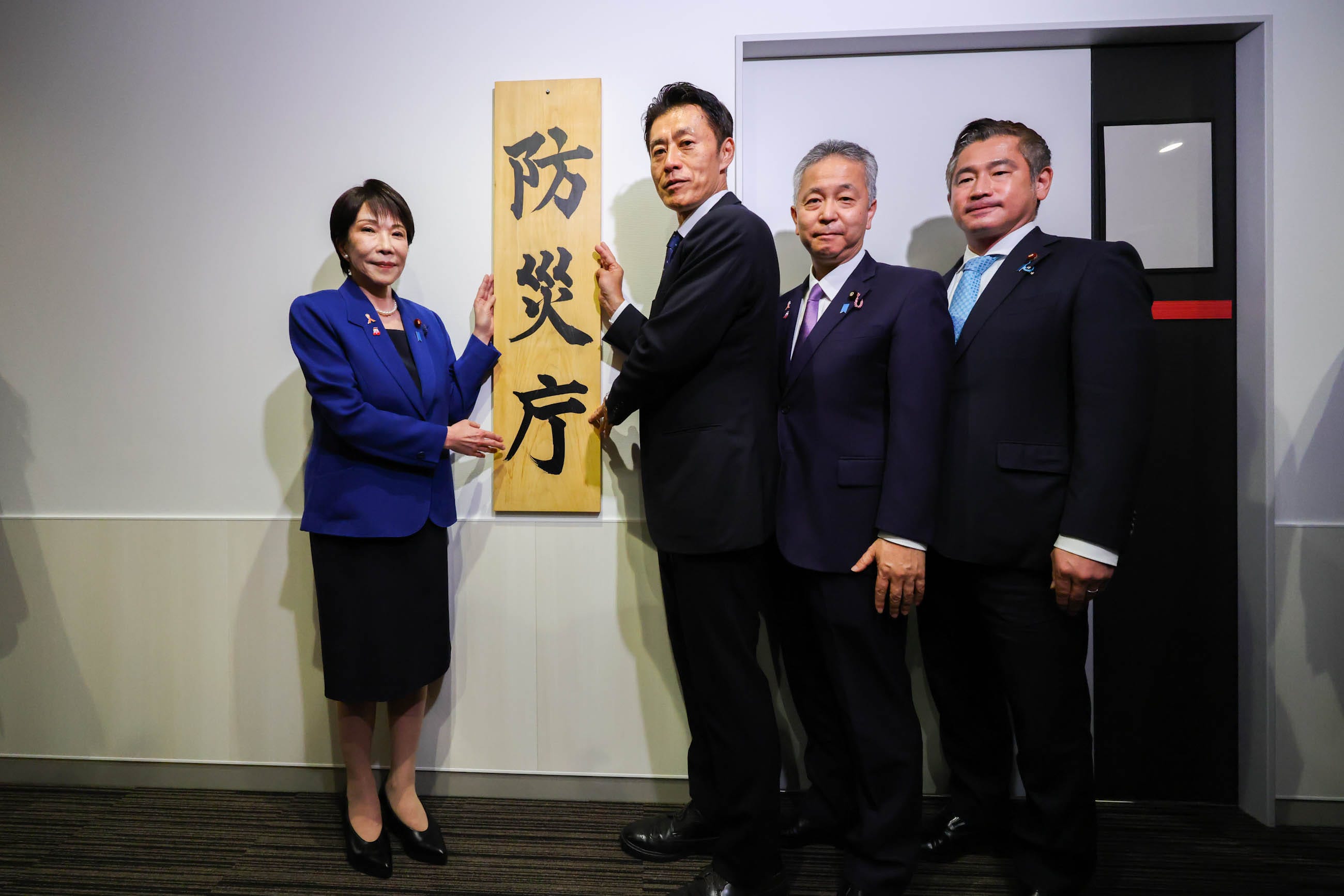
Headed by Prime Minister Sanae Takaichi and managed by Minister of State for Disaster Management Goshi Hosono, Japan officially launched its National Disaster Management Agency on November 2, 2026.
Established under Diet legislation passed in July, Hosono who was the minister in charge of the Fukushima nuclear crisis, stated that the new agency will serve as a disaster response command centre, enhancing preparedness to protect people's lives and property, with the goal of making Japan the most prepared country in the world.
Fewer than half of Japan’s municipal officials have received disaster-management training in the past five years. Moreover, only 15% of municipalities have evacuation plans for older people and persons with disabilities who need assistance, said Hosono.
The National Disaster Management Agency has about 350 employees, roughly 1.6 times the number previously assigned to disaster management at the Cabinet Office. According to The Standard, Japan plans to set up regional disaster offices, with their locations expected to be decided by the summer of 2027. These offices are likely to begin work by July 2028.
As, the country has already seen massive disaster-related deaths who survive the initial event but later succumb to stress or declining health, also known as saigai kanrenshi. The new National Disaster Management Agency also plans to introduce a system to send relief supplies directly to disaster-hit areas without waiting for requests from local authorities. This is expected to help deliver essential goods more quickly after major disasters. The new agency plans to provide portable toilets, kitchens, bathing facilities, cardboard beds and other essential amenities
As reported in the Jiji Press, Former Prime Minister Shigeru Ishiba, who advocated the creation of the new agency, said the country needs to make the agency "capable of accumulating and passing on knowledge and experience" of disaster management. Also, Nagoya University professor emeritus Nobuo Fukuwa, an earthquake engineering expert, argues that, for the new disaster management agency to serve as the control tower for the entire government and respond to national crisis-level disasters, “a strategy that is completely different from conventional measures” is necessary, such as building a system involving society as a whole, including industries.
The agency focused on emphasising self-reliance for the public and mentioned directives specifying storing three litres of water per person daily, anchoring furniture, retrofitting pre-1981 homes, and reviewing local hazard maps. Japan’s National Disaster Management Agency represents proactive disaster governance, but significant limitations persist, such as training local municipal groups and connecting the vast national system. How the government will protect people when disaster strikes is what we have to observe. As the Japanese expression goes, Okiteminaito wakaranai “You won’t know until it happens.”