


Donald Trump had showcased a grand institutional gesture for peace and reconstruction in Gaza by endorsing his year-ago initiative, the Board of Peace, launched at the World Economic Forum in Davos. He claimed the world is “richer, safer and much more peaceful than it was just one year ago”. Initially created to oversee the Israel–Hamas ceasefire in Gaza, the body soon took on a much broader mandate, raising questions about its membership, the source of its authority, and the conditions attached to its funding. By creating a structure that overlaps with the role of the UN Security Council, the initiative risks weakening established channels of international diplomacy and concentrating decision-making in an ad hoc framework with limited accountability.
US President Donald Trump's son-in-law, Jared Kushner, who has no official role within the administration, led the unveiling of a $2.45bn plan for rebuilding Gaza. It consists of 66 programs that would rehabilitate Gaza's infrastructure and economy, destroyed by two years of full-scale Israeli military assault. The announcement was made last month during a meeting on the sidelines of the United Nations General Assembly. "Obviously, this is a long-term project. It's not something that can happen in six months. But it at least gives people hope. Here’s the future that awaits you if everyone does their part." said US Secretary of State Marco Rubio in New York. US presents a liberal peacebuilding process, while realist power politics within the region would be a fundamental obstacle in the rebuilding journey.
The Reality on the Ground
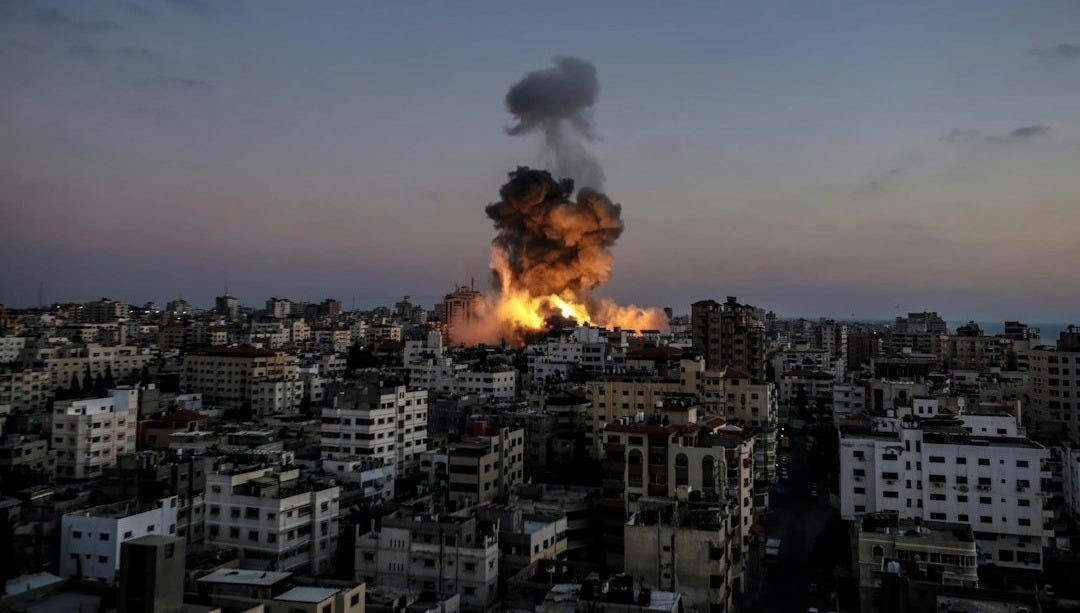
Despite ambitious reconstruction promises from international agencies, Gaza remains shattered. The latest Rapid Damage and Needs Assessment by the World Bank, United Nations, and European Union estimates total recovery and reconstruction needs in Gaza at approximately US$71.5 billion. According to reports from the Palestinian Central Bureau of Statistics and the United Nations, approximately 82% of all buildings in the Gaza Strip have sustained severe damage.
Displacement of people due to war has reached unprecedented levels. Approximately nine out of ten people in Gaza were internally displaced at least once, with nearly the entire population of 2.1 million experiencing repeated displacement. Gaza’s health system is functioning at a fraction of its former capacity, with roughly half its hospitals and primary-care clinics out of service. More than 18,500 patients, including some 4,000 children, are in need of urgent treatment and rebuilding the health sector alone will require more than $400m. Satellite imagery shows damage to schools, with 93% requiring full reconstruction before education can properly resume.
Gaza’s socioeconomic losses since 2023 have erased years of development. According to the United Nations Office for the Coordination of Humanitarian Affairs (OCHA), violence continued across the Gaza Strip, with airstrikes, shelling and gunfire causing further casualties. Between 10 October 2025 and 27 February 2026, the UN Human Rights Office recorded at least 224 Palestinians killed near the “Yellow Line” and 347 in attacks farther away. In the West Bank, tighter movement restrictions since 28 February obstructed ambulances and delayed medical care. WHO recorded nine incidents involving obstructed ambulances, while fuel and cooking-gas shortages further disrupted healthcare, humanitarian operations and essential services.
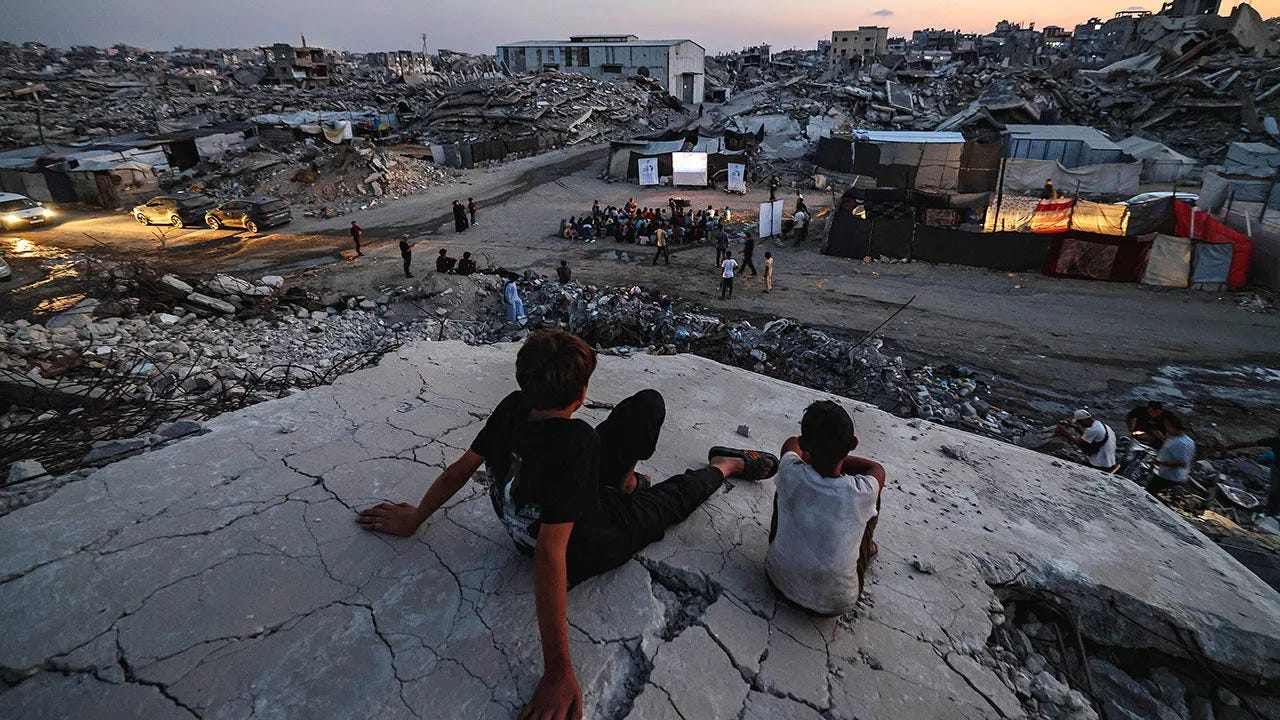
Some 2.1 million people, almost the entire population of the Gaza Strip, are currently displaced and living within the limits of the “yellow line”, according to the UN. The “Yellow Line”, the ceasefire demarcation separating areas of Israeli military control from territory available to Palestinian civilians, has become a defining feature of post-ceasefire life. As reported in UN News, Safaa Mushtaha, an Al-Tuffah resident, said that asking where the family could move to has become part of their daily lives.“Where do we go?’ This is a question we’ve been asking ourselves for three years,” she said. “We accepted living near the yellow line, but it’s become unbearable.”
Hamas no longer holds formal governmental authority, yet it continues to exercise territorial control, albeit over less than 40 per cent of the Strip. The group is significantly weaker militarily, but it compensates through its political and especially civil institutions. According to the private Israeli monitoring firm Nisaba, Hamas has increasingly relied on Quwat al-Radaa, or “Deterrence Forces”, a covert internal-security unit reportedly tasked with monitoring dissent, suppressing criminal activity and reasserting Hamas’s authority in areas where its formal police presence has weakened.
Why Is the Board of Peace (BoP) Stalled?
In July, President Trump announced that the Board of Peace, endorsed by the UN Security Council, declared it had reached a “historic” agreement with Hamas and other Palestinian factions to decommission their weapons, with a fifteen-point roadmap with Hamas on the group's disarmament and the transfer of civilian and security control of Gaza to a new Palestinian technocratic government, the National Committee for the Administration of Gaza (NCAG), to lead the process.
But this peace deal was short-lived, as Hamas said its disarmament was linked to wider political conditions, including the establishment of a Palestinian state, while Israel continued to demand the complete dismantling of Hamas' military capabilities before a full withdrawal.
The pledges of $17 billion remain largely unfulfilled as Gulf donors hesitated without clear financial channels or political guarantees. At the Board of Peace’s February 2026 launch, nine states plus the US committed about $17 billion, but by spring only three- the UAE, Morocco and the US had transferred funds, totalling under $1 billion, while donors signalled that disbursements would be phased and conditional on governance and security arrangements. This led to a lack of trust between countries, and they could not work collectively.
Israel has barred 37 major humanitarian organisations, including Médecins Sans Frontières and Oxfam, from operating in Israel and the occupied territories after they declined to meet new registration requirements. The bans were imposed because international NGOs have resisted Israeli demands that they reveal biographical details of all Palestinian employees, which the groups say violate privacy laws and fear Israel could use to go after the individuals.
While UNSC Resolution 2803 granted the Board of Peace legislative and executive powers over Gaza, it offered few clear safeguards for the local population, leaving questions over accountability and enforcement. The resolution did not clearly establish mechanisms to protect Palestinian civilians from arbitrary or unaccountable decision‑making by the board. This has also led to the withdrawal of support by some groups. Indonesia’s President Prabowo Subianto has signalled that Jakarta could withdraw from the “Board of Peace” if it fails to advance Palestinian independence, reflecting Indonesia’s longstanding foreign-policy commitment to Palestinian statehood and sovereignty.
While other UN agencies, including the World Food Programme and World Health Organisation, continued to operate in Gaza, they have stressed that United Nations Relief and Works Agency for Palestine Refugees in the Near East (UNRWA) remained the most capable provider of humanitarian assistance. Rather than complementing and cooperating with UNRWA, attempts were made by BoP to establish parallel mechanisms, risking humanitarian operations and weakening the existing UN-led aid infrastructure.
Conclusion: Future Ahead
The International Crisis Group argues that humanitarian aid should not be made dependent on the Hamas disarmament process, as it might leave ordinary Palestinians stuck in humanitarian limbo, while armed groups still hold power. Instead, the group urges that decommissioning of weapons should go step‑by‑step with Israeli withdrawals and be separated from aid delivery. Many Palestinians have expressed serious doubts about the ceasefire agreement, arguing that it has not brought the conflict to an end but instead merely paused the fighting while formalising arrangements that favour Israel.
Israel’s domestic election in October could produce a major political turning point, playing a significant role in international events. But the election offers no obvious choice between fundamentally different visions of Israel’s regional role, as all leading candidates largely agree on the centrality of military power. As Netanyahu gears up for legislative elections, experts worry that Israel could resume full-scale operations after its October elections, with even more destruction and displacement.
Ultimately, Gaza cannot be rebuilt without security and political authority, but the actors controlling security and political authority have not agreed on who should govern Gaza. When the delegations leave, the documents are signed, and the cameras disappear, Palestinians will remain. They will rebuild their homes, restore their communities and carry the consequences of decisions made in their name. Gaza’s future, therefore, cannot merely be designed for Palestinians. It must be shaped with them and, ultimately, by them.