


By Oscar Beckmann Gil
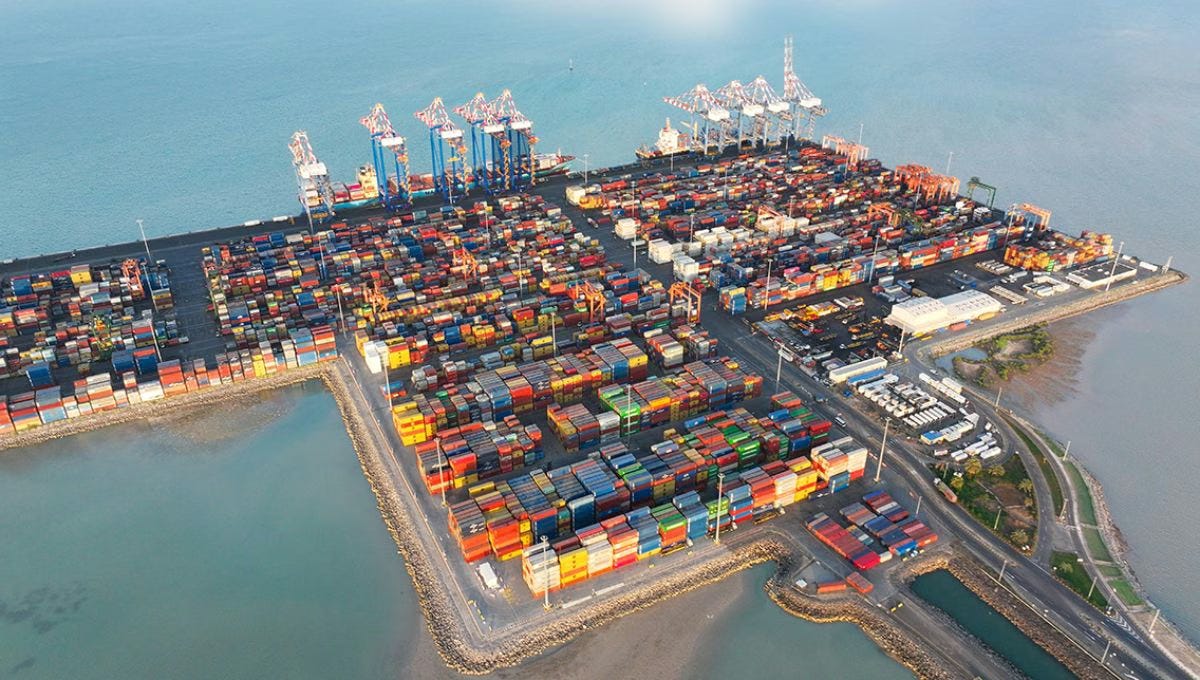
There are few places on earth where foreign geopolitical power is as concentrated as in Djibouti. The small East African nation hosts 8 permanent military bases operated by the world’s most prominent global superpowers. Out of these 8 competitors, the US has the largest presence domestically; 4,000 US troops are currently deployed in the military settlement “Camp Lemonnier”, while China, Saudi Arabia and France are also among the most involved regionally. Its location near heavily conflicted regions such as the Horn of Africa, the Gulf region, and the Bab-el-Mandab strait, through which 22% of the world’s container trade passes (Voß), is just one of the factors that make Djibouti’s location so valuable. And its proximity to ongoing Middle Eastern conflicts will keep it strategically relevant internationally in the foreseeable future. But why has this small nation become a seat of power for the world’s strongest nations? And how are these external influences affecting Djiboutian sovereignty?
From the perspective of Djibouti, leveraging its geopolitical standpoint has given it an invaluable economic lifeline that has been proven to be extremely profitable financially. Through the combined leases of all foreign military bases, the government brings in about 117 million USD annually, with the largest share from the US, at approximately 63 million USD (Nawaz et al.). While this is a very significant flow of income, even more valuable is the trade that flows through its harbours. According to the Konrad Adenauer Foundation, 85% of the nation’s GDP is made up by services, 70% of which fall under port logistics, a large portion of which can be tied to military logistics. The importance of the exploitation of their location to the Djiboutian economy is only multiplied by their limited access to natural resources. While other nations often rely on vast amounts of natural capital for economic stimulation, such as oil or minerals, Djibouti does not have this opportunity as the country is almost entirely barren of resources (Ali). The Agricultural sector accounts for only 1% of the GDP (Voß), while 82% of the state’s population live in or around the capital (Nawaz et al.), both metrics which point towards bad environmental conditions. Hence, Djibouti has to find a way to exploit its only viable source of economic activity: location. However, this heavily relies upon domestic and regional stability to enable it, which gives Djibouti considerable incentives to ensure this, which is reflected in its foreign policy.
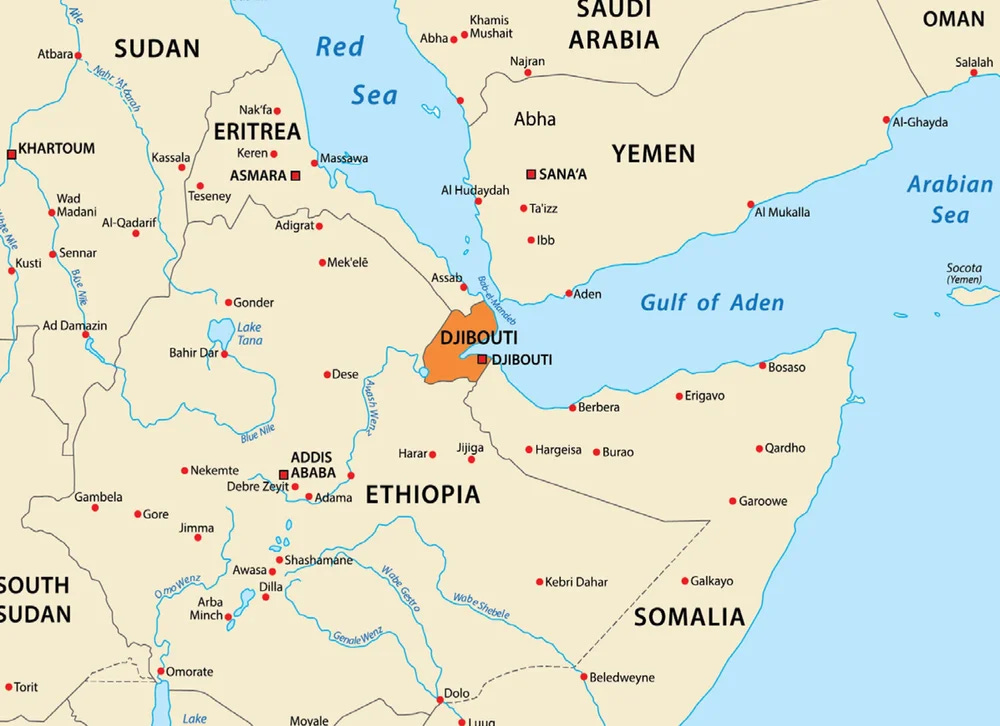
Djibouti has primarily achieved a reputation for advocating for regional stability through its role as a mediator in regional conflicts. For example, Djibouti has often worked towards negotiating peace between Ethiopia and Somalia, both direct neighbours, in hopes of re-establishing regional stability that could be threatened by its geopolitical role. The first of such occurrences was in 1986 and 1988 when Djibouti mediated talks between the governments after a violent conflict in which Somalia attempted to reclaim pre-colonial “Greater Somalia” primarily based on ethno-nationalism (UCPD).
In January 1986, the Somali President Barre and Ethiopian President Mariam met in Djibouti for preliminary talks, which bore little fruit. However, in 1988 they managed to form an agreement under Djiboutian supervision which stopped the conflict (UCPD). This exemplifies how Djibouti’s role as neutral ground helped reintroduce regional stability. Furthermore, Djibouti actively engages in inter-state regional peacekeeping operations. The participation of the state’s military in the “African Union Support and Stabilisation Mission in Somalia” (AUSSOM) and Djibouti City being the headquarters for the Intergovernmental Authority on Development (IGAD) both exemplify the government’s actions in safeguarding regional stability (Voß). Therefore, Djibouti’s awareness of its economic needs fuels its concerns for regional peace, as this is the only way those economic opportunities can be realised.
However, external influence has eroded Djiboutian sovereignty, displaying how years of foreign presence and its increased geopolitical importance have not come without a cost. In 2017, the Chinese “Doraleh support base” was established in Djibouti as the first permanent Chinese military base outside of the country’s borders (Yimer). This marked Djibouti’s intent to diversify its alliances by opening its arms to rivals of Western nations. However, the ongoing rivalry between the USA and China would eventually add to the undermining of Djiboutian domestic and strategic sovereignty. When the Chinese inquired about purchasing the operating rights for the Port of Doraleh, the US answered with heavy protest. In Washington, U.S. General Thomas D. Waldhauser stated that “if the Chinese took over that port, then the consequences could be significant”, and since then, talks broke down (Yimer). Additionally, in 2014, Russia inquired about potentially setting up a base of operations in Djibouti, which was shortly rejected after the Djiboutian government was pressured by the US to stop talks for a bilateral agreement (Voß).
However, threats to Djiboutian sovereignty are not only one-sided; growing Chinese influence in the region has been perceived with great concern by Western allies and domestic leaders as China gains more and more influence throughout the small state. Djibouti’s Public foreign debt has doubled from 50% of its GDP in 2016 to 104% in 2018, most of which is Chinese loans for Infrastructure (Yimer). This debt could be leveraged to sway Djiboutian politicians into making decisions in support of Chinese objectives in the region. Hence, Global powers are leveraging their presence of economic importance for the nation to influence domestic decision-making and therefore eroding Djiboutian sovereignty.
Ultimately, Djibouti’s geopolitical relevance is both its greatest strength and weakness. While it economically makes up for the lack of an industrial base or natural resources, the nation and its location have risen to a level of importance at which global players are beginning to scrutinise the state’s allegiances. While the future of Djibouti is still uncertain, it seems as though its geopolitical location is unlikely to lose importance in the coming years. So the state’s autonomy and political future heavily depend on its ability to play the interests of global players off of each other without being captured by either.
About the Author: Oscar is a young writer passionate about international relations and geopolitics. Having lived in Azerbaijan, Germany, Indonesia and Cambodia, he brings a global perspective to his work. Reach him at oscarbg009@gmail.com
Author’s Note: The views and opinions expressed in this article are those of the author. The author is responsible for the accuracy and verification of the facts and information presented. These views do not necessarily reflect the editorial position of The Frontier Review.
References:
Ali, Faisal. “’Our geography is our oil’: Why Djibouti hosts many foreign military bases.” Al Jazeera, https://www.aljazeera.com/news/2026/4/8/our-geography-is-our-oil-why-djibouti-hosts-many-foreign-military-bases. Accessed 27 October 2026.
Cutbill, Catherine C. “History of Djibouti | Independence, Events, People, Dates, Maps, & Facts.” Britannica, https://www.britannica.com/topic/history-of-Djibouti. Accessed 27 October 2026.
Nawaz, Adnan, et al. “A Geo-Strategic Importance of Djibouti: Presence of Foreign Military Bases.” ResearchGate, 2025, https://www.researchgate.net/publication/392914327_A_geo-strategic_importance_of_Djibouti_Presence_of_foreign_military_bases. Accessed 27 October 2026.
Uppsala Conflict Data Program. “Ethiopia - Somalia.” UPCD, https://ucdp.uu.se/conflict/268. Accessed 28 10 2026.
Voß, Jan. “Djibouti’s geostrategic importance.” Konrad-Adenauer-Stiftung, https://www.kas.de/en/country-reports/detail/-/content/djibouti-s-geostrategic-importance. Accessed 27 October 2026.
Yimer, Nigusu Adem. “How Djibouti Surrounded Itself by Military Bases.” Politics Today, 17 March 2021, https://politicstoday.org/djibouti-surrounded-by-military-bases-of-china-us-france-uk-germany-others/. Accessed 27 October 2026.