


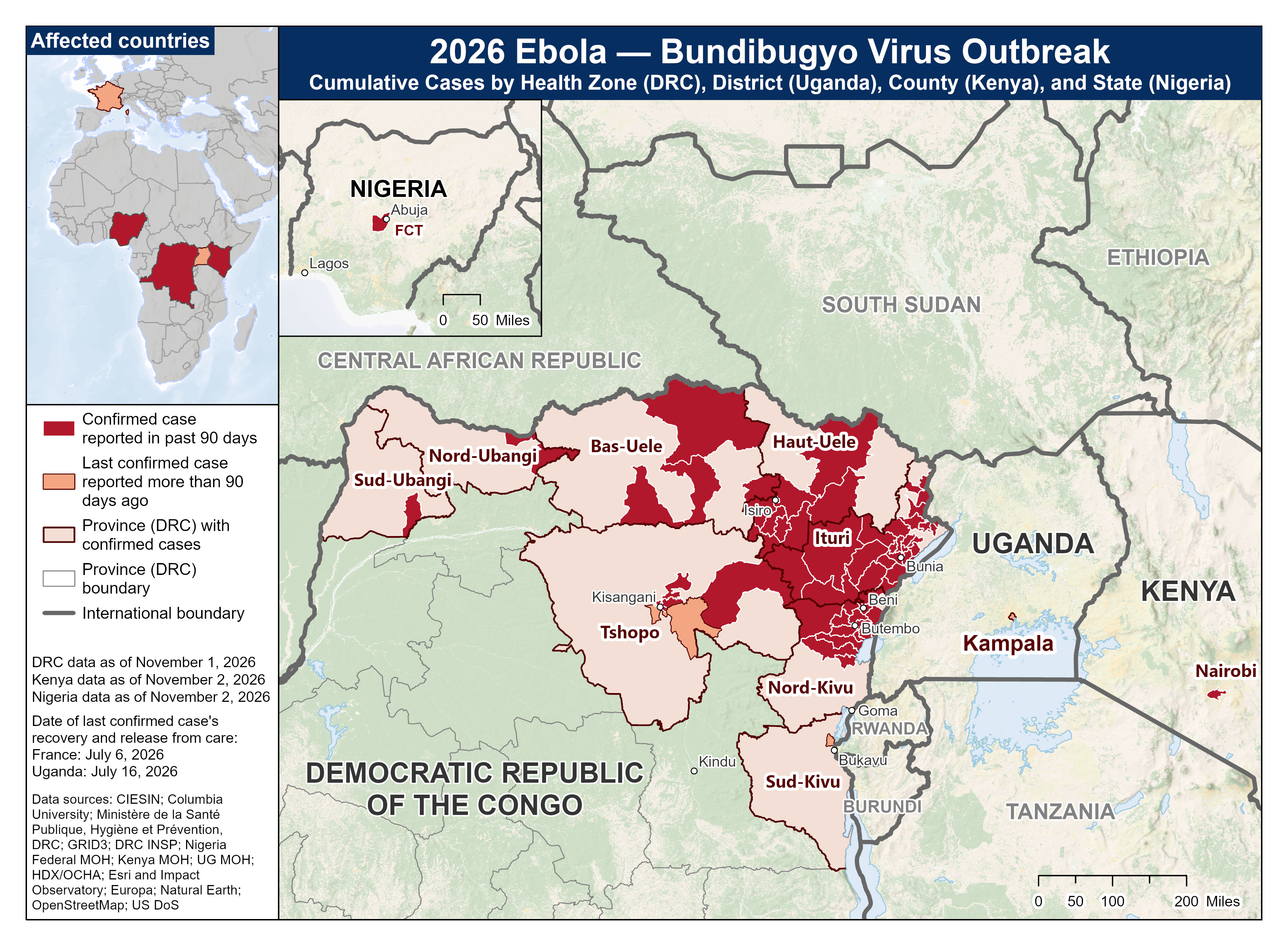
The outbreak of Bundibugyo virus (BVD) has been recorded as the largest Ebola emergency in the region of Democratic Republic of the Congo (DRC). As of November 1, 2026, the U.S. Centres for Disease Control and Prevention (CDC) had recorded 10,563 confirmed cases and 5,130 deaths worldwide, based on data from affected countries.
The DRC accounted for 10,532 cases and 5,126 deaths, while the remaining cases were reported in Kenya, Nigeria, Uganda and France. Ebola virus disease outbreaks have occurred in Africa since 1976, mainly in the Congo and Nile River basins. The discovery of Bundibugyo ebolavirus in 2007 added to the known diversity of ebolaviruses.
The virus has spread beyond the borders of the DRC, raising concern for higher regional transmission in the coming months. Kenya reported its first case on 6 October, involving a man who travelled from the DRC through Uganda to Nairobi, where he was hospitalised and died. Eight further cases, including relatives and healthcare workers who had been in close contact with him, were subsequently confirmed.
Nigeria reported its first case on October 20, also linked to the current outbreak. Uganda, meanwhile, recorded 20 confirmed and one probable case, although no active infections remained by November. The rapid outbreak has alerted and pressured public health authorities. Due to the potential for cross-border transmission and wider international spread, on October, 31, the World Health Organisation reported the outbreak as a Public Health Emergency of International Concern (PHEIC).
Bundibugyo virus (BDBV) is a member of the Filoviridae family that causes Bundibugyo virus disease (BVD), a severe form of viral haemorrhagic fever. It is a distinct Ebola virus species that can cause serious illness in humans, with symptoms ranging from fever and weakness to severe bleeding and organ damage.
The Filoviridae is a family of viruses named after their long, thin, thread-like shape. These viruses can infect humans and animals, causing severe diseases such as Ebola and Marburg. They can spread through direct contact with the blood or bodily fluids of infected people or animals. Initial human infections may also occur through contact with infected wild animals, during hunting and handling of bushmeat.
The first recognised BVD outbreak occurred in Bundibugyo District, western Uganda, during August 2007–February 2008, with Kikyo, Kabango, and Bundibugyo. The second recognised BVD outbreak occurred in 2012 in northeastern Democratic Republic of the Congo (DRC), centred on the Isiro Health Zone in the former Orientale Province, with Isiro and Dungu.
The natural reservoir of ebolaviruses remains uncertain, although research suggests that certain fruit bat species may carry some filoviruses. However, researchers have not conclusively identified a natural reservoir for Bundibugyo virus. Experimental studies have also shown that domestic pigs can support viral replication and transmission.
Bundibugyo virus differs genetically from other Ebola viruses. The genetic component of the virus differs by more than 30% from other Ebola virus species, including the proteins that help the virus infect cells. For example, its surface glycoprotein and VP35 protein differ from those of Zaire ebolavirus by 35% and 25%, respectively.
Following infection, patients typically present with non-specific symptoms: severe headache, fever, myalgia, asthenia, abdominal pain, nausea, vomiting, non-bloody diarrhoea, dysphagia, and loss of appetite. Long-term survivors often suffer persistent multi-system sequelae, including ocular deficits, fatigue, arthralgia, and neurological symptoms. Diagnosis requires broad RT-PCR testing for filoviruses, followed by genome sequencing to identify the virus species and BDBV-specific RT-qPCR testing.
There are currently no approved vaccines or specific antiviral treatments for Bundibugyo ebolavirus. The treatment mainly focuses on supportive medical care to manage symptoms and complications. Ongoing research includes trials of antiviral drugs such as remdesivir and monoclonal antibody treatments such as MBP134 and maftivimab. The World Health Organisation (WHO) has recommended evaluating these treatments in clinical trials, including their use in combination. Another antiviral drug, obeldesivir, is being studied for preventing infection in people who have been exposed to the virus.
There are certain practical challenges to the research, as scientists work with the virus in highly secure laboratories known as Biosafety Level 4 (BSL-4) facilities. Additionally, the unavailability of enough patient data also limits the amount of research that can be carried out. Even though historically BVD carried a lower pooled mortality rate, it is still associated with severe clinical morbidity and persistent public health risks.
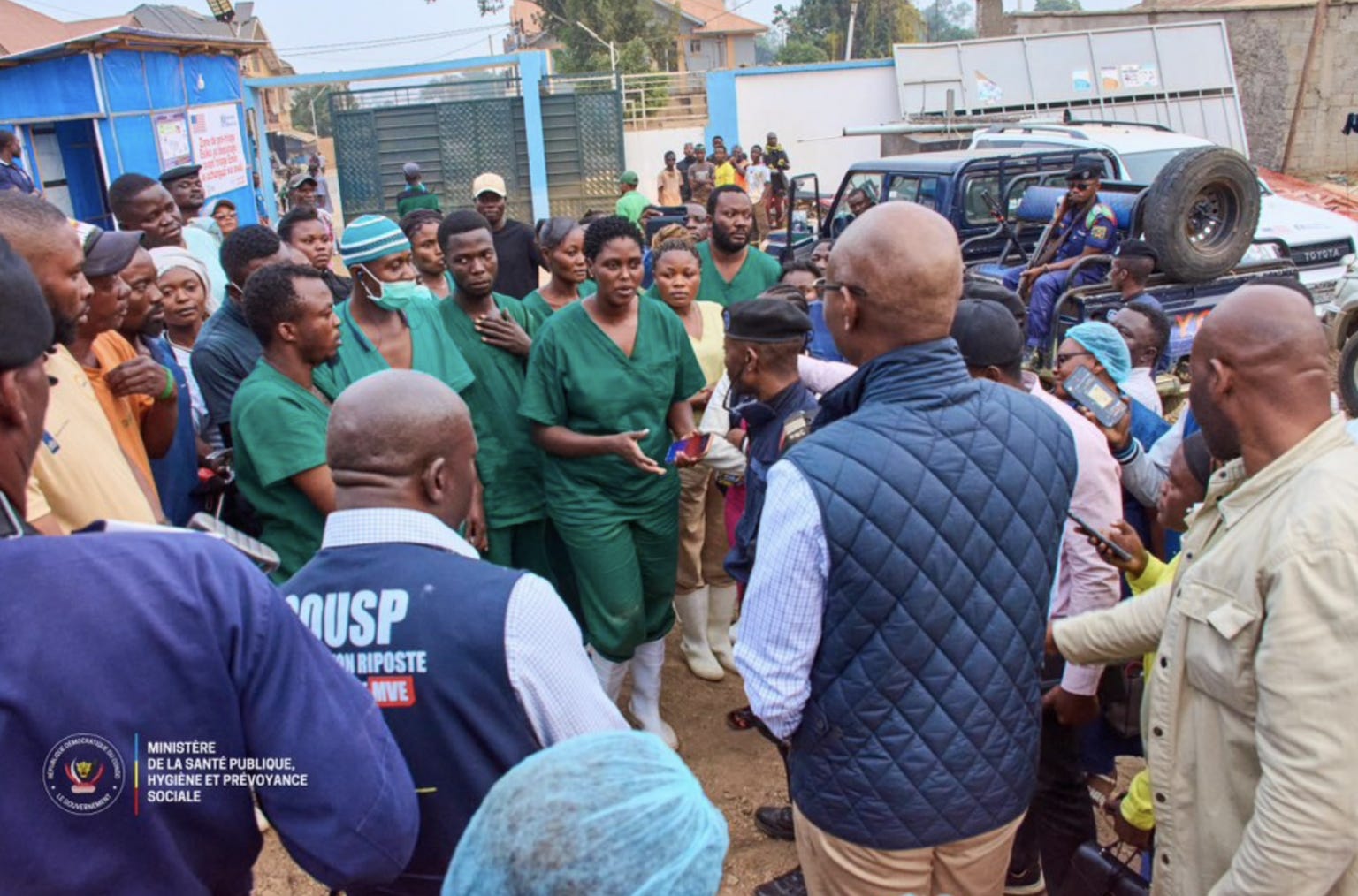
Governments across Africa have strengthened their Ebola response systems with support from the World Health Organisation (WHO), Africa Centres for Disease Control and Prevention (Africa CDC), and other international partners. Measures include screening travellers at airports and land border crossings, monitoring people who may have been exposed to the virus, and maintaining isolation and laboratory testing facilities.
In the Democratic Republic of the Congo (DRC), initiatives include expanding treatment and isolation facilities, improving surveillance for tracing people who may have come into contact with infected patients, and taking preventive steps for infection in hospitals. They have also provided protective equipment to healthcare workers and trained teams to conduct safe and dignified burials.
The recurring emergence and transboundary spread of Bundibugyo ebolavirus (BDBV) across African countries highlight a major weakness in global health security. The current reactive, crisis-driven research cycle leaves affected regions vulnerable to diagnostic delays, a lack of validated treatments and the absence of licensed BDBV-specific vaccines. The need of the hour is to shift towards sustained, proactive preparedness.
Priorities include developing broad-spectrum countermeasures, field-validated rapid point-of-care diagnostics and cross-border surveillance systems. Addressing Post-Ebola Syndrome through survivor care registries, strengthening community trust, coordinated international financing and regional capacity-building are also essential to protect vulnerable populations.